
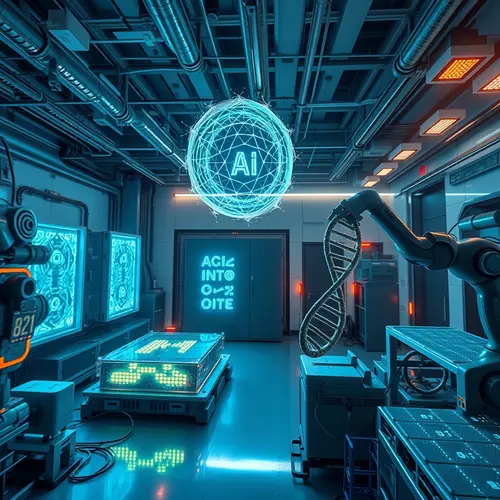
The latest technological advancements represent a fundamental shift in how humanity solves problems, processes information, and interacts with the physical world. These breakthroughs span artificial intelligence, quantum computing, biotechnology, and renewable energy systems, each creating ripple effects across industries and redefining what’s possible.
Understanding the Scope of Latest Technological Advancements
Innovation cycles have accelerated dramatically. What once took decades to develop now materializes in years, driven by exponential improvements in computational power and cross-disciplinary collaboration.
According to research from MIT Technology Review, the convergence of multiple technology domains creates compound effects that far exceed individual innovation impact. This synergy explains why breakthroughs appear to cluster rather than emerge in isolation.
The most transformative innovations share common characteristics: they solve previously unsolvable problems, reduce costs exponentially, and enable entirely new categories of applications.
Artificial Intelligence and Machine Learning Breakthroughs
AI systems have evolved beyond pattern recognition into genuine reasoning capabilities. Large language models demonstrate emergent abilities that weren’t explicitly programmed, including complex problem-solving and creative synthesis.
Multimodal AI systems process text, images, audio, and video simultaneously, mimicking human cognitive integration. This advancement enables applications from medical diagnostics that analyze multiple data streams to autonomous vehicles that interpret complex environments.
The practical implications extend to drug discovery, where AI models predict molecular interactions with accuracy that would require decades of laboratory testing. Researchers at DeepMind demonstrated protein folding solutions that eluded scientists for fifty years.
Generative AI Applications
Generative models create novel content across domains. These systems don’t merely copy existing patterns but synthesize new combinations based on learned principles.
Engineering teams use AI-generated code to accelerate development cycles by 40-60%, according to industry benchmarks from Stack Overflow. The technology handles boilerplate code while developers focus on architecture and business logic.
Quantum Computing Architecture
Quantum processors manipulate qubits in superposition states, enabling parallel computation at scales impossible for classical systems. This represents one of the most significant latest technological advancements in computational theory.
Error correction remains the primary technical hurdle. Quantum states are inherently fragile, requiring sophisticated isolation and cooling systems to maintain coherence.
Practical applications target specific problem domains: cryptography, molecular simulation, optimization algorithms, and financial modeling. IBM and Google have demonstrated quantum advantage for particular computational tasks.
Real-World Quantum Applications
Financial institutions explore quantum algorithms for portfolio optimization and risk analysis. The technology processes thousands of variables simultaneously, identifying patterns invisible to classical approaches.
Pharmaceutical companies leverage quantum simulation to model drug interactions at the atomic level. This capability accelerates development timelines from years to months for specific compound classes.
Biotechnology and Gene Editing Innovation
CRISPR-Cas9 systems enable precise genetic modifications with unprecedented accuracy. Researchers can now edit individual base pairs within DNA sequences, opening possibilities from disease treatment to agricultural enhancement.
The latest technological advancements in gene therapy have progressed from laboratory concept to FDA-approved treatments. Patients with previously untreatable genetic disorders now access targeted interventions.
mRNA vaccine platforms demonstrated remarkable development speed and efficacy. The underlying technology platform adapts rapidly to new targets, from infectious diseases to cancer immunotherapy.
Renewable Energy Systems and Storage
Solar photovoltaic efficiency has doubled while costs dropped by 90% over fifteen years. Perovskite materials promise further improvements, with laboratory efficiencies exceeding 25%.
Battery energy density improvements enable electric vehicles with ranges exceeding conventional combustion engines. Solid-state battery architectures eliminate liquid electrolytes, improving safety and energy capacity.
Grid-scale energy storage solves the intermittency challenge of renewable generation. Facilities store excess capacity during peak production and discharge during high demand, stabilizing electrical networks.
Comparative Analysis of Technology Domains
| Technology | Primary Application | Maturity Level | Industry Impact |
|---|---|---|---|
| Artificial Intelligence | Automation, Analysis, Content Generation | Commercially Deployed | Cross-Industry Transformation |
| Quantum Computing | Complex Optimization, Simulation | Early Adoption Phase | Specialized Applications |
| Gene Editing | Medical Treatment, Agriculture | Clinical Implementation | Healthcare Revolution |
| Advanced Battery Systems | Energy Storage, Transportation | Mass Production | Infrastructure Shift |
Debunking Common Technology Myths
Many believe technological progress follows linear trajectories. Historical data reveals punctuated equilibrium patterns with rapid advancement periods separated by consolidation phases.
The notion that single breakthroughs drive change oversimplifies reality. Most latest technological advancements result from decades of incremental progress culminating in visible breakthroughs.
Another misconception assumes automation eliminates jobs wholesale. Evidence shows technology redistributes labor toward higher-value activities while creating entirely new employment categories.
Expert Analysis: The Integration Challenge
From fifteen years observing technology deployment, the critical bottleneck isn’t innovation itself but organizational integration. Companies struggle adapting processes, training personnel, and updating infrastructure to leverage new capabilities.
Successful implementations share common patterns: phased rollouts, extensive testing protocols, and continuous feedback loops. Organizations that rush deployment encounter resistance and suboptimal results.
The most sophisticated technology delivers value only when properly integrated into existing workflows. This requires change management expertise alongside technical competence.
Practical Implications for Businesses and Individuals
Organizations must develop technology literacy at all levels. Decision-makers need sufficient understanding to evaluate opportunities without requiring engineering expertise.
Key strategic considerations include:
- Identifying specific problems that new technologies address rather than adopting innovations for their own sake
- Building flexible infrastructure that accommodates rapid technological evolution
- Investing in continuous learning programs to maintain workforce relevance
- Establishing ethical frameworks for technology deployment before implementation
- Creating feedback mechanisms to measure actual impact against projected benefits
Individual Adaptation Strategies
Professionals benefit from understanding core technological principles even without deep technical skills. This knowledge enables effective collaboration with technical teams and informed decision-making.
Focusing on uniquely human capabilities becomes increasingly valuable. Creative problem-solving, emotional intelligence, and strategic thinking complement rather than compete with technological automation.
Looking at Fundamental Trajectories
The latest technological advancements converge toward several key themes: increased computational efficiency, enhanced human-machine interfaces, sustainable resource utilization, and personalized solutions at scale.
Edge computing distributes processing power closer to data sources, reducing latency and bandwidth requirements. This architecture enables real-time applications from autonomous systems to industrial automation.
Brain-computer interfaces progress from research laboratories toward practical applications. Non-invasive systems read neural signals with sufficient accuracy for device control and communication assistance.
The Path Forward
Technological advancement accelerates through compound effects as innovations build upon previous breakthroughs. Understanding these latest technological advancements equips individuals and organizations to navigate transformation effectively.
Success requires balancing adoption speed with thoughtful implementation. The organizations thriving through technological disruption maintain curiosity, adaptability, and focus on solving genuine problems rather than chasing trends.
The most impactful latest technological advancements ultimately serve human needs, augmenting capabilities and addressing challenges that constrain progress. This human-centric focus ensures technology development aligns with broader societal benefit.

Nisa Kure is a senior tech reviewer at Fabrikant Tech testing phones, SSDs, wearables, and smart-home gear. 5+ years, 200+ hands-on reviews. Method: 2-week daily use, benchmarks, and thermal logs. Author of 840 tech guides since 2022.

More Stories
Latest Technology in Computer: Ultimate Guide
Advanced Technology Examples: 10 Real-World Applications
Top Fintech Brands in the US Worth Watching