
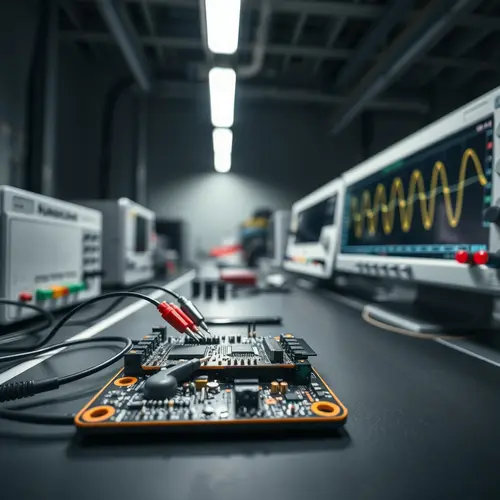
Building a repeatable process for developing new technology requires disciplined engineering, not luck. The core answer lies in a structured lifecycle moving from problem discovery through commercial deployment.
Core Phases of developing new technology
Every successful program follows a recognizable pattern. Skipping phases creates technical debt that compounds exponentially. The standard lifecycle includes discovery, feasibility, architecture, validation, scaling, and sustainment.
Validating Concepts in developing new technology
Validation separates science projects from products. Engineers must prove the physics and the economics simultaneously. A prototype that works in a lab but fails unit economics is a hobby, not an asset.
- Problem Fit: Confirm the pain point exists and users pay for relief.
- Technical Feasibility: Prove the hard science works at bench scale.
- Economic Viability: Model Bill of Materials (BOM) and OpEx targets early.
- Regulatory Path: Identify FDA, FCC, or UL requirements before design freeze.
According to guidelines from NIST, early-stage risk reduction saves ten times the cost of late-stage fixes. Teams that ignore this data point often burn runway chasing unfixable architecture flaws.
Architecture Decisions That Lock In Margins
Architecture choices cascade into manufacturing yield, serviceability, and regulatory clearance. Modular designs isolate risk. Monolithic designs optimize peak performance but brittle failure modes.
Experienced leads enforce interface control documents (ICDs) between subsystems. This discipline allows parallel development. Mechanical, electrical, and firmware teams move independently when contracts are frozen early.
| Phase | Primary Gate | Key Risk |
|---|---|---|
| Discovery | Problem/Solution Fit | Building a vitamin, not a painkiller |
| Feasibility | Physics Proof | Ignoring second-order effects (thermal, EMI) |
| Development | Design Freeze | Scope creep destroying schedule |
| Validation | DVT/PVT Pass | Yield collapse at volume |
| Launch | First Ship | Supply chain single points of failure |
The Myth of the “MVP” in Hard Tech
Software teams ship Minimum Viable Products. Hardware teams cannot. A “minimum viable” medical device or autonomous sensor kills people or destroys capital. The correct analog is the Minimum Viable Experiment.
Run the smallest test that falsifies the biggest assumption. If the battery chemistry degrades at 40°C, you learn that in a climatic chamber, not a field trial. This approach aligns with DARPA’s “fail fast” doctrine but applies it to component physics rather than market fit.
Supply Chain as a Design Constraint
Bill of Materials (BOM) management starts at architecture. Selecting a sole-source microcontroller because the dev kit is easy creates existential risk. Design for substitution. Qualify alternate parts during DVT (Design Validation Test).
As reported by MIT Technology Review, companies maintaining qualified second sources weathered the semiconductor shortage with <2% revenue impact. Those locked to single sources saw 15-20% drops. Design for availability is now a core engineering competency.
Expert Opinion: The “Build Trap”
I have watched three well-funded startups collapse because they optimized the build instead of the learn. They automated assembly lines for products nobody wanted. They polished firmware for use cases that vanished.
The fix is boring. Weekly hypothesis reviews. Kill metrics defined before code compiles. A hypothesis looks like: “We believe needs because . We will know we are wrong if < threshold by .”
If the metric misses, pivot the architecture. Do not “push through.” Pushing through in developing new technology without data is just expensive stubbornness.
Regulatory Strategy Is Product Strategy
Regulatory is not a compliance checkbox. It dictates feature scope, data architecture, and labeling. Engage a regulatory consultant before schematic capture. Class II medical devices need 510(k) clearance; that requires predicate devices and specific testing protocols.
Consumer IoT needs FCC Part 15 and UL listing. Automotive needs ISO 26262 ASIL ratings. Each standard forces design decisions. Retrofitting safety cases into a finished design costs 50x the upfront effort.
Sustaining Engineering Starts at Launch
Launch is not the finish line. It is the start of the longest phase. Telemetry instrumentation must ship in V1. You cannot fix field failures you cannot see. Allocate 20% of engineering capacity to observability tooling before first customer ship.
Mastering the full cycle of developing new technology means treating sustainment as a first-class requirement, not an afterthought.

Nisa Kure is a senior tech reviewer at Fabrikant Tech testing phones, SSDs, wearables, and smart-home gear. 5+ years, 200+ hands-on reviews. Method: 2-week daily use, benchmarks, and thermal logs. Author of 840 tech guides since 2022.

More Stories
Ultimate Guide to emerging technologies for business
Next Big Technology: 5 Paradigm Shifts To Watch
Futuristic Technologies Reshaping Industries Today